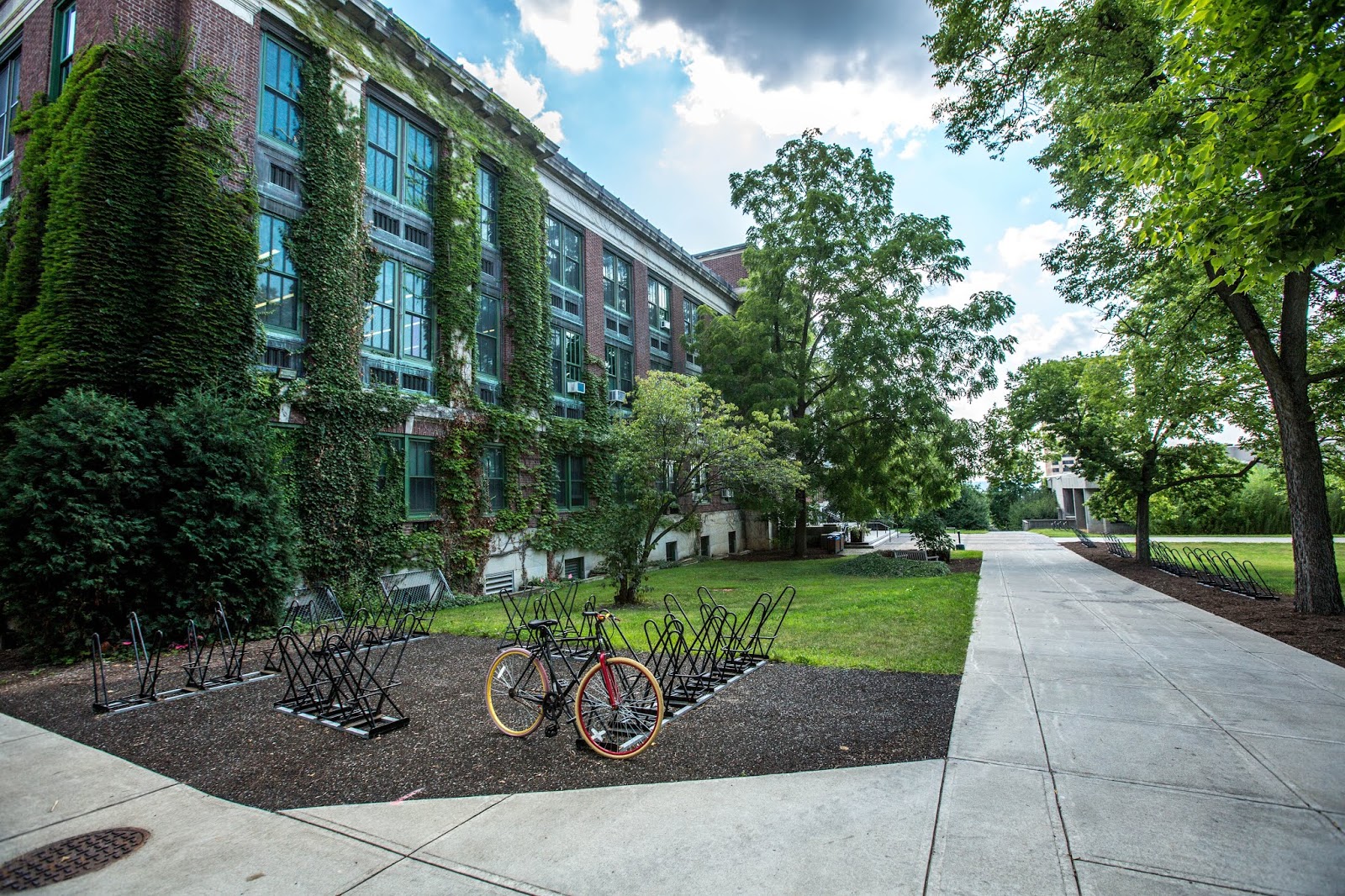
A big thanks goes to Sallie Pollack, Piano Division Head at the University of Central Oklahoma, for today's guest post!
-----
The University of Central Oklahoma is the only university in Oklahoma that offers a MM in Collaborative Piano. UCO is located in the city of Edmond, Oklahoma, just north of Oklahoma City and offers collaborative piano students many opportunities to learn, grow, and share in a wealth of performance opportunities available at the the university, city and state levels.
Collaborative piano students serve the UCO School of Music by partnering with others in vocal and instrumental applied lessons, large and small ensembles, and opera, music theatre and ballet productions. Students connect with a dynamic faculty in all areas of music making and get a chance to network with other students and professionals in a blossoming metropolitan environment.
The UCO masters collaborative piano curriculum offers a well-rounded program that allows for intensive one-on-one work with actively performing professors, instrumental and vocal coaching training, growth in diction expertise and immersion in the vast instrumental and vocal collaborative literature. Teaching assistantships and tuition waiver awards are available.
Contact Sallie Pollack at Spollack@uco.edu or at salliepollack.com for more information. Please visit http://sites.uco.edu/cfad/ for a detailed description of the fine arts programs at the University of Central Oklahoma.
Showing posts with label Degree Programs. Show all posts
Monday, July 23, 2018
Thursday, July 12, 2018
The Royal College's Piano Accompaniment Programs Have Been Renamed as Collaborative Piano Programs
Starting this summer, the Royal College of Music's Piano Accompaniment Programs will be renamed as collaborative piano, the first program in Britain to use this term for a graduate program. The change to the collaborative piano nomenclature is already up on the keyboard department website.
From a recent press release on the name change:
Students on the RCM’s robust Masters in Collaborative Piano course receive two years of training, developing a broad knowledge of the instrumental duo, chamber and song repertoire as well as being introduced to the skills needed to become a répetiteur, ballet pianist, continuo player, orchestral pianist or vocal coach.Kudos go to Simon Lepper and the Royal College for making this name change. It will be interesting to see if other programs across Britain follow suit. If you're interested in more information about the Royal College's collaborative piano programs, email Simon Lepper at simon dot lepper [at] rcm dot ac dot uk.
(Thanks Simon!)
Photo by Grace Kang on Unsplash
Labels:
Degree Programs
Tuesday, July 03, 2018
Degree Programs: Anne Kissel on SUNY Fredonia's new Master of Music in Collaborative Piano
Today's submission from the ongoing series about degree programs in collaborative piano comes from Dr. Anne Kissel, who created the new Master of Music program in Collaborative Piano at SUNY Fredonia.
_______
_______
If you are looking for a small, intensive, and supportive environment for your master's level studies in collaborative piano, I invite you to take a look at the Fredonia School of Music. Nestled among the grape vineyards south of Buffalo, New York, Fredonia is a small, primarily undergraduate institution with a large and internationally recognized music program. Our collaborative piano students have the opportunity to build a diverse skill set, playing for singers, instrumentalists, large ensembles, and opera, while exploring coursework in chamber music and song literature, diction, and opera coaching. Our studio's small size enables me as your instructor to mentor the many aspects of your development. That means sometimes sitting in on rehearsals, supporting you as you learn to build strong and respectful professional relationships, carefully monitoring your workload so that you have time to practice and grow, and extra coaching when you need it, as well as the possibility of tailoring your work to encompass your specific interests.
Our performance faculty is exceptional, and are wonderfully supportive of our student pianists. But perhaps the greatest strength of the program is the quality of our student collaborators. Our collaborative pianists partner with our very top singers and instrumentalists, many of whom have gone on to highly successful careers as performers. Fredonia has many grads who are currently living and working in NYC, and there is an active alumni network there, which is an asset when looking for freelance employment post-graduation.
We have a small number of assistantships and scholarships to offer, which combined with our relatively low tuition, makes for a very affordable masters degree. Our degree program is relatively new, and it boasts a small (but mighty!) group of alumni who have worked/are working as freelance accompanists in NYC, Buffalo, Fredonia, and for regional opera companies nationwide, and also one holding a teaching position at a college in China.
I'm always happy to field your questions via email, or meet with you in person if you'd like to visit our campus. Or check out the following links:
- Fredonia School of Music: http://home.fredonia.edu/music
- Fredonia's Collaborative Piano Facebook page: https://www.facebook.com/Colla
borative-Piano-at-SUNY-Fredoni a-165327426820043/ - Audition Information: http://home.fredonia.edu/music
/grad-info
I look forward to hearing from you!
Labels:
Degree Programs
Friday, June 29, 2018
Degree Programs: Rachel Fuller on the University of Auckland
A few days ago, I put out a call for students, grads, and faculty of collaborative piano programs to talk about their programs from their own perspective, and what it can offer the very large number of potential students who are interested in applying during the coming year.
The first submission is from Rachel Fuller, who is on the faculty at the University of Auckland School of Music in New Zealand. Feel free to contact Rachel with any questions that you might have about the program.
_________________
Here at the University of Auckland in New Zealand we are also training collaborative pianists to posess a broad range of skills and prepare them for careers in multiple areas of collaboration.
I am very proud to head up a programme designed to progressively develop collaborative skills in our young pianists throughout their undergraduate study. At honours level (4th year) and at masters level they can specialise in collaborative piano alone or combine it with pedagogy and/or solo studies and/or chamber music. I currently have a masters pianist focused on developing répétiteur skills as well as vocal coaching skills. I have an honours student developing the skills to become a Music Theatre M.D. and another specialises in string acoompanying. These young collaborative pianists are taking an instantly active role in the community as young professionals well before they have graduated and that to me is very exciting. Our community needs pianists who know how to collaborate with skill and knowledge.
We welcome young pianists with a view to developing their collaborative skills. And when you’ve finished rehearsals then the beach is just down the road! It’s a wonderful life here in Auckland. Come and see for yourself. Haere mai - Welcome.
Labels:
Degree Programs
Tuesday, June 26, 2018
Call for Faculty, Alumni, and Current Students of Collaborative Piano Programs: What Makes Your Program Worthwhile?
To put it bluntly, there are a lot of very fine young pianists who are interested in applying for collaborative piano programs in the coming year, but are having difficulty navigating the huge amount of information available on the internet. Finding the right school can be a career-defining choice, and if you've associated or have ever been associated with a collaborative piano program this is a great way for you get the word out, both from faculty, your current students, and alumni. I'll figure out a publishing schedule once I start receiving submissions.
Here are some things you can write about in your submissions - these can be tailored from the point of view of faculty, current students, or past students in a program:
- What makes/made your collaborative piano program meaningful and worthwhile in terms of your artistic development?
- How did the specialization/generalization of the program help to build your skill set?
- How did the size of the school of music (large or small) help to create a worthwhile experience?
- What was it like working with faculty in your program?
- What was it like collaborating with singers and instrumentalists in the program?
- What kind of work is available for graduate/teaching assistantships?
- What are some of your most memorable experiences?
- How did your program help with getting you work in the profession?
How to send your submissions
Please submit your submissions to collaborativepiano [at] gmail dot com in the body of an email, with all formatting (including hyperlinks) already done. Please do not send PDF, Word, or Pages files, as these take forever to transfer the formatting to html.
Please DO send the following:
- hyperlinked text to relevant pages on your university website, YouTube videos about your program, or your own website
- images
- honest, first-person language about what the program means to you
- multiple submissions if you've attended more than one program and would like to talk about all of them
- links to your own current projects/employment if you're a student or alumni
Please DO NOT:
- put me on your university's mailing list
- get Marketing to do your submissions
- send press releases
- send submissions about non-collaborative piano programs
- send negative information about programs you've attended
A huge thanks to the folks who suggested this idea and I look forward to posting lots of submissions over the coming weeks and months!
(Photo by Ryan Jacobson on Unsplash)
Labels:
Careers,
Collaborative Piano,
Degree Programs
Friday, July 03, 2015
Simon Lepper Talks About the Accompanying Program at The Royal College of Music
Over the last few months, I've been in correspondence with Simon Lepper, one of Britain's top accompanists. He was recently featured on a CPB article on what it takes to be an accompanist and why the British are so awesome at it, and reached out regarding a possible profile of the accompanying program at London's Royal College of Music, which he coordinates. Simon is a recipient of the Gerald Moore and Geoffrey Parsons Awards, and has an incredibly active musical career, including serving as official accompanist of the Cardiff Singer of the World Competition. If you would like to contact Simon regarding the RCM's accompanying program, you can find a contact link on his website. (A note for all you Torontophiles: the "RCM" moniker in this article refers to the Royal College of Music in London, not the Royal Conservatory of Music in Toronto.) --CF
The Royal College of Music in London is uniquely situated opposite the Royal Albert Hall in the heart of Kensington’s museum district. The 2-year Masters piano accompaniment course at the RCM equips our students with the skills to give them the best possible chance of a long and fulfilling career as a musician after graduation.
There is a great tradition of British accompanists stretching back to Gerald Moore and beyond. At the RCM, we are proud to have had many of the internationally famous collaborative pianists train and teach here including Geoffrey Parsons, Julius Drake, Malcolm Martineau and, more recently, Gary Matthewman.
The course balances teaching in the art of song accompaniment with lessons in instrumental accompaniment. These two areas are taught in group-lessons by internationally renowned song pianist, Roger Vignoles, and in one-to-one lessons with a professor of your choice. We offer additional classes in “accompaniment skills”. These include the “art of vocal coaching” through to continuo and orchestral piano playing, quick learning and an “introduction to conducting”. A close relationship with the vocal department allows our postgraduate accompanists to play for language classes and opera scenes. This provides invaluable training should a student want to develop a career as a repetiteur or opera conductor. For those students with a greater interest in chamber music the RCM provides extra tuition from any professor chosen by a registered chamber music group.
Each year we take only a small number of accompanists on to the course. This allows for our piano accompaniment students to have a greater choice of instrumentalists and singers with whom to collaborate at the RCM. Many of these musical relationships forged whilst at the RCM will continue on into a professional working life. The students are encouraged to play for singers and instrumentalist’s lessons as well as the many internal and external competitions. Recent student successes have included those in the Maggie Teyte Prize, Royal Overseas League Prize and Kathleen Ferrier Award.
I would encourage those interested in studying piano accompaniment at the RCM to take a look at the website. Please do write to any professor you might be interested in studying with and, if you have time, arrange a consultation lesson. The RCM experience is a rich and fulfilling one but don’t just take my word for it - feel free to get in touch with a former piano accompaniment student, Ian Tindale (ian [at] iantindale dot com). He’ll tell you exactly what it’s like from a student’s perspective.
Hope to see you at the auditions in December!
Simon Lepper
Professor of piano accompaniment and co-ordinator for the RCM piano accompaniment course. www.simonlepper.com
The Royal College of Music in London is uniquely situated opposite the Royal Albert Hall in the heart of Kensington’s museum district. The 2-year Masters piano accompaniment course at the RCM equips our students with the skills to give them the best possible chance of a long and fulfilling career as a musician after graduation.
There is a great tradition of British accompanists stretching back to Gerald Moore and beyond. At the RCM, we are proud to have had many of the internationally famous collaborative pianists train and teach here including Geoffrey Parsons, Julius Drake, Malcolm Martineau and, more recently, Gary Matthewman.
The course balances teaching in the art of song accompaniment with lessons in instrumental accompaniment. These two areas are taught in group-lessons by internationally renowned song pianist, Roger Vignoles, and in one-to-one lessons with a professor of your choice. We offer additional classes in “accompaniment skills”. These include the “art of vocal coaching” through to continuo and orchestral piano playing, quick learning and an “introduction to conducting”. A close relationship with the vocal department allows our postgraduate accompanists to play for language classes and opera scenes. This provides invaluable training should a student want to develop a career as a repetiteur or opera conductor. For those students with a greater interest in chamber music the RCM provides extra tuition from any professor chosen by a registered chamber music group.
Each year we take only a small number of accompanists on to the course. This allows for our piano accompaniment students to have a greater choice of instrumentalists and singers with whom to collaborate at the RCM. Many of these musical relationships forged whilst at the RCM will continue on into a professional working life. The students are encouraged to play for singers and instrumentalist’s lessons as well as the many internal and external competitions. Recent student successes have included those in the Maggie Teyte Prize, Royal Overseas League Prize and Kathleen Ferrier Award.
I would encourage those interested in studying piano accompaniment at the RCM to take a look at the website. Please do write to any professor you might be interested in studying with and, if you have time, arrange a consultation lesson. The RCM experience is a rich and fulfilling one but don’t just take my word for it - feel free to get in touch with a former piano accompaniment student, Ian Tindale (ian [at] iantindale dot com). He’ll tell you exactly what it’s like from a student’s perspective.
Hope to see you at the auditions in December!
Simon Lepper
Professor of piano accompaniment and co-ordinator for the RCM piano accompaniment course. www.simonlepper.com
Labels:
Degree Programs
Friday, January 03, 2014
Call for Pianists: Graduate Assistantship at Stephen F. Austin State University
Ron Petti from Stephen F. Austin State University sends along the following information about their graduate assistantship in collaborative piano:
Responsibilities
Graduate assistants in piano accompanying are afforded the opportunity to work with nearly every area within the School of Music, including choral ensembles, opera workshop, wind ensemble, orchestra, vocalists, and instrumentalists. Work load includes up to 20 clock hours per week and the 9-month stipend is approximately $9,200. More information about auditions or the assistantship is available from:
Dr. Ron Petti, Director of Accompanying
rpetti [at] sfasu dot edu
(936) 468-1191
The School of Music at SFA
With approximately 400 enrolled undergraduate and graduate students, the School of Music at Stephen F. Austin State University is a thriving community of musicians and scholars. The various fields of study offered include music education, performance, conducting and theory/composition. With a wide variety of performance opportunities and a central location between Houston and Dallas, SFA provides an ideal setting for pursuing graduate studies in music.
Address assistantship applications to:
Director of Graduate Studies
School of Music
Stephen F. Austin State University
Nacogdoches, TX 75965
graduatemusic [at] sfasu dot edu
For more information about programs at SFA, you can visit the graduate admissions and performance track page with information about the collaborative piano program.
Labels:
Degree Programs
Sunday, December 09, 2012
Cal State Northridge Now Offers a Master of Music in Degree in Collaborative Piano
Starting in September 2013, California State University at Northridge will be launching a Master of Music Degree in Collaborative Piano Performance. Congratulations go to Pei-Shan Lee for developing the program, which is now open to applicants for the 2013-14 academic year.
If you're interested in applying, you'll need a Bachelor of Music degree in piano performance or its equivalent. Here is the audition rep, which is in line with what you'll find on CP audition lists at many schools of music:
If you're interested in applying for the CalState Northridge program, contact Dr. Lee sooner rather than later with any questions you might have about the program. Here is her address: peishan.lee [at] csun.edu.
Here is Pei-Shan Lee playing the second movement of the Enescu Third Sonata for Violin and Piano with Korbinian Altenberger on violin:
If you're interested in applying, you'll need a Bachelor of Music degree in piano performance or its equivalent. Here is the audition rep, which is in line with what you'll find on CP audition lists at many schools of music:
A. Art Songs (choose one song for each language)I particularly like the fact that orchestral reductions are on the audition list. Although the four works to choose from are by no means the hardest reductions in the repertory, they show a lot about the handling of orchestral sonority in each style.
All works must be performed in the high keys unless otherwise stated.
GermanSchubert: Die Forelle (low key in A major)Brahms: Meine Liebe ist grünStrauss: MorganFrenchDebussy: C’est l’extase (from Ariettes oubliées)Duparc: ExtaseEnglishBarber: Crucifixion (from Hermit Songs)Copland: Heart, we will forget him
B. Instrumental Sonata (choose one of the following)
Beethoven: Sonata for Piano and Violin No. 5 in F major, op. 24, first movementBeethoven: Sonata for Piano and Violin No. 7 in c minor, op. 30, no. 2, first movementBrahms: Sonata for Piano and Clarinet No. 1 in f minor, op. 120, no. 1, first movementProkofiev: Sonata for Flute and Piano, op. 94, first movement
C. Orchestral Reductions (choose one of the following)
Mozart: Clarinet Concerto in A major, first movementMozart: Flute Concerto in G major, first movementMozart: Deh vieni non tardar (from Mozart’s Le Nozze di Figaro)Verdi: De’ miei bollenti spiriti (from Verdi’s La Traviata)
D. Solo
Applicant's choice to be performed by memory (any piece or movement under 10 minutes)
If you're interested in applying for the CalState Northridge program, contact Dr. Lee sooner rather than later with any questions you might have about the program. Here is her address: peishan.lee [at] csun.edu.
Here is Pei-Shan Lee playing the second movement of the Enescu Third Sonata for Violin and Piano with Korbinian Altenberger on violin:
Labels:
Degree Programs
Monday, August 27, 2012
Unconventional Exam Questions
For those of you teaching at the university level, here's a fascinating idea from Tyler Cowen via Kottke: have the students write their own questions and answers for an exam.
For the exams I use for my course at the GGS, I routinely write one question that I divulge the week before the exam, partly to encourage them to come to the review class, and partly because the question really does require a fair amount of thought and research. When I taught an art song class at UBC, I once wrote an entire final exam consisting of broad questions and opinion pieces that covered the entire year's work. The students were welcome to use all their notes from the class. As an open book exam, the students were highly motivated to assemble a large body of notes to take to the exam, which they would then have on hand to consult as they entered the profession.
One of my teachers described a similar idea in an exam they had taken in the 1970's - the final exam required the students to describe in detail what they had learned throughout the course.
Tyler [Cowen] once walked into class the day of the final exam and said, “Here is the exam. Write your own questions. Write your own answers. Harder questions and better answers get more points.” Then he walked out.Tyler goes on to say later in the quote that the concept would probably work better for one question than an entire exam. I can see this type of question working better for specialized university courses than for standardized exams.
For the exams I use for my course at the GGS, I routinely write one question that I divulge the week before the exam, partly to encourage them to come to the review class, and partly because the question really does require a fair amount of thought and research. When I taught an art song class at UBC, I once wrote an entire final exam consisting of broad questions and opinion pieces that covered the entire year's work. The students were welcome to use all their notes from the class. As an open book exam, the students were highly motivated to assemble a large body of notes to take to the exam, which they would then have on hand to consult as they entered the profession.
One of my teachers described a similar idea in an exam they had taken in the 1970's - the final exam required the students to describe in detail what they had learned throughout the course.
Labels:
Degree Programs,
Piano Pedagogy
Friday, August 24, 2012
Studying Collaborative Piano in France
A few weeks ago, I received an inquiry from a reader about the best places to study collaborative piano in France. Not knowing the answer to this reader's question, I emailed Geraldine Boyer-Cussac, who responded with this full-length article on the educational system in France and how you can navigate its options in order to study collaborative piano there. On an important side note, Geraldine, along with David J. Hahn, has recently created Theatre Music Directors, an online resource hub for coaches, conductors, arrangers, and music directors.
Because French is one of the languages collaborative pianists must know, it makes sense that some of us would want to study in France at some point. The thing is that it’s not always easy to find online information for French programs, and on top of that, the schooling system is quite different there from the one we’re accustomed to. So, since I was born and musically raised there, let me start by giving you a little background information on how things work a la francaise.
French students take a wide variety of classes all year long, every year, until the end of high school. After they pass the baccalauréat, students go to the university to study the one topic of their choice- no gen ed classes. Musicians decide then between going to the university for music, or attending the conservatory. The first option consists mainly of theory and history classes with little focus on the instrument, and leads to a career as a K-12 instructor or a university professor.
The second option - the Conservatory - is the most frequently picked. What is interesting about it is that it doesn’t work by age, but by levels. Children usually join the conservatory at a young age after taking and passing the entrance audition, and take their solfege classes, instrumental lessons and ensembles there. The levels are split into “cycles,” each ending with an exam to move on to the next. They can last anywhere between two to five years, and teachers are the ones to decide which year their students can start taking the exam. This system culminates with a médaille d’or (gold medal - think diploma, not an actual medal), which is the very minimum one needs to be able to teach in any local music schools. There is an option to continue to a diplome de perfectionement, which is really a way for students to either keep on studying with their teacher a bit longer, or to figure out their next move.
What all of this means is that by the time a teenager graduates high school and decides to focus on playing, he or she will either stay at the conservatory and may be at any point in the conservatory curriculum- usually at that age, either the end of the third cycle or the médaille d’or cycle, even though it is considered to be the equivalent of the high school baccalauréat. Most conservatories do not have a collaborative track, although a few do including the one I went to in Lyon - it required at least a médaille d’or in piano or its equivalency, along with the entry audition. This is a three to four-year track, which tends to lead its students straight into the CNSM (more on that below).
Those conservatories are in any major city of France, forty-one in total. They are called “regional,” and all function under the same standard of education with the same length of studying per semester, similar levels of difficulty, and equal requirements for teacher’s certifications- they also teach theatre and dance. So what is a student supposed to do after they’re done with the “conservatoire regional?” They have a few options.
One of them is to go to the CNSM- Conservatoire National Supérieur de Musique. There are two of those “superior” conservatories, one in Paris and one in Lyon. They are incredibly competitive, with an age limit for each instrument, and a maximum of three attempts to try to get in. It is not infrequent for a particular studio to not even have space available for a year or two until someone graduates. That’s where the ultra-talented go to, and there are many fourteen-year-olds around, focusing on music while they are home-schooled. For the chosen few who do make it, the program lasts four years, and ends with the acquisition of a premier prix (first prize), considered in North America as the equivalent of a Bachelor of Music. The CNSMs accept many international students every year, and as usual for France, the cost of attendance is incredibly low. The collaborative track there is fantastic, with focus on transposition, on-the-spot reductions, and sight-reading, along with ensemble playing and study of styles.
If you are still in high school and know that you want to become a collaborative pianist - and already are at an incredibly high level of playing - you can try to get into either one of the CNSM. There aren’t that many undergraduate collaborative degrees in North America, so this could be the best thing for you to do, focus on what you love right away, get your undergraduate equivalency once you’re back home, and do it without accumulating thousands of dollars in student debts. Of course, you first have to take the audition and get in. You can find more information here.
The second option after a regional conservatory is for future instrumental music teachers - who will work at conservatories, so they follow a different path from K-12 music teachers who go to the university. CEFEDEM (Centre de formation de la musique) came about only around ten years ago, are fairly competitive to get in, and last two years. They end with the acquisition of the DE - diplome d’état (state diploma), which is the minimum certificate needed (the other one is the CA, certificat d’aptitude, which is even harder to get and leads to higher paid jobs) to apply for a teaching position in conservatories and many other music schools in the country. They do have a curriculum for collaborative pianists, who can go on to accompanying positions in conservatories with their DE, rather than teaching positions. For American and Canadian students interested in studying in France, this option would only be helpful for having a career in France, and would not be of interest to anyone who wants to be in France only temporarily.
Knowing all of that, where does the prospective short-term student go? Here are your options:
1. If what you want is to spend a semester or a year in France, your best bet is to do it through your college. Ideally, you would have picked a university that offers study abroad, and if it did not, cross your fingers that your school has what you need. For exchange programs, regional conservatories will usually let you study temporarily without taking an audition. I first got to the US thanks to one of those exchange programs, one between Kalamazoo College and the Clermont-Ferrand (my hometown) universities, and I know that many of the US music students would study at the regional conservatory there.
2. For anyone who wants to get a Masters in France, the Ecole Normale Supérieure de Paris is the best option. I don’t know as much about it, except that my teacher in France studied there, and that he was wonderful. Here is their page for international students.
3. If you’re on your own, not affiliated to any school, and not wanting to do the masters mentioned above, you will have to audition to any regional conservatory to be able to attend. This makes most sense if you can stay there for at least a year and try to get the medaille d’or. Make sure to check on visa requirements first to know how to go about doing that. This would definitely be the hardest way to go about the whole thing.
4. Finally, the last option is to attend summer programs, usually called stage d’été, or académie d’été. Here are a couple, but there are many more (the links are mostly in French): Musique a Groix, Domaine Musiques, and the Academie Francis Poulenc.
Bon Voyage!
Labels:
Careers,
Degree Programs
Tuesday, August 09, 2011
Collaborative Piano Studies at the Eastman School of Music
The Eastman School of Music at the University of Rochester offers both Master of Music and Doctor of Musical Arts degrees in Piano Accompanying and Chamber Music, presided over by Dr. Jean Barr, who was the first person ever to be awarded a doctorate in the field. About the program:
If you're interested in applying for one of the Eastman programs, you'll need to take a close look at the Accompanying Audition Repertoire List, especially regarding the song selections, which you'll need to learn in high, medium, and low keys.
For more information, contact Dr. Jean Barr at jbarr [at] esm dot rochester dot edu.
Disclaimer: I studied at the Eastman School of Music, where I received both a Master of Music (1991) and Doctor of Musical Arts (1994).
Complete listing of Degree and Diploma Programs in Collaborative Piano
The training of pianists as artistic collaborators is the goal of the graduate programs in piano accompanying. Collaborative pianists must have the same technical skills as soloists, plus knowledge of languages, diction, sonata and duo repertory, vocal repertory, and chamber music. Recital requirements include performances with instrumentalists and vocalists. The lively performance scene at Eastman creates a willing body of collaborators and many performance opportunities for accompanying majors. Guest artists and lecturers have included Bettie Buccheri, Jonathan Feldman, Graham Johnson, Warren Jones, Martin Katz, Gwendolyn Koldofsky, Tom Muraco, Robert Spillman, and Roger Vignoles.There is plenty of information on the site, with sections on audition requirements and procedures, audition information for current Eastman students, detailed course information, and handbooks for each degree.
If you're interested in applying for one of the Eastman programs, you'll need to take a close look at the Accompanying Audition Repertoire List, especially regarding the song selections, which you'll need to learn in high, medium, and low keys.
For more information, contact Dr. Jean Barr at jbarr [at] esm dot rochester dot edu.
Disclaimer: I studied at the Eastman School of Music, where I received both a Master of Music (1991) and Doctor of Musical Arts (1994).
Complete listing of Degree and Diploma Programs in Collaborative Piano
Labels:
Degree Programs
Tuesday, May 24, 2011
Collaborative Piano Studies at Duquesne University
The Mary Pappert School of Music at Duquesne University offers a Collaborative Piano Emphasis as part of their Master of Music in Performance Degree. About the program:
For more information, check out page 21 of the Graduate Catalog or contact Kenneth Burky at burky [at] duq dot edu.
Complete list of Degree and Diploma Programs in Collaborative Piano
The emphasis in collaborative piano is designed for the advanced pianist who wishes to make accompanying and chamber music a career focus. Students may elect a concentration in either instrumental collaboration and chamber music or vocal collaboration and coaching. Each track will include practical experience in the appropriate instrumental or vocal studios and ensembles.Entrance to this degree requires a high level of proficiency at solo repertoire, as the audition process requires the preparation of a full solo recital (in addition to the sight reading of instrumental and vocal repertoire). You'll also need to submit an instrumental/vocal rep list.
For more information, check out page 21 of the Graduate Catalog or contact Kenneth Burky at burky [at] duq dot edu.
Complete list of Degree and Diploma Programs in Collaborative Piano
Labels:
Degree Programs
Tuesday, May 17, 2011
Collaborative Piano Studies at the University of Colorado at Boulder
The College of Music at the University of Colorado at Boulder offers both a Master of Music and a Doctor of Musical Arts in Collaborative Piano. About the program:
Complete list of Degree and Diploma Programs in Collaborative Piano
The area offers MM and DMA performance degrees in collaborative piano, as well as courses in chamber music, sightreading and accompanying. Students receive specialized training in chamber music, instrumental accompanying, art song, opera, harpsichord, coaching techniques, and practical aspects of the collaborative career world, and they have opportunities to interact with many of the outstanding instrumental and vocal faculty and students in the College of Music.Here are the audition requirements for both degree programs:
Master of Music repertoire requirementsFor more information, send an email to collaborativepiano [at] colorado dot edu.
Doctor of Musical Arts repertoire requirements
- One (1) complete standard sonata for instrument and piano, such as Franck, Brahms, Beethoven, or Prokofiev;
- One movement of a standard instrumental concerto (with the exception of piano concerti);
- A group of six (6) art songs of contrasting styles and character, representing the French, German and English languages.
- Two (2) complete standard sonatas for instrument and piano, such as Franck, Brahms, Beethoven, or Prokofiev. One sonata must be for a stringed instrument and piano, the other for a wind/brass instrument and piano;
- One movement of a standard instrumental concerto (with the exception of piano concerti);
- A group of six (6) art songs of contrasting styles and character, representing the French, German and English languages.
Complete list of Degree and Diploma Programs in Collaborative Piano
Labels:
Degree Programs
Friday, October 29, 2010
Collaborative Piano Studies at SUNY Fredonia
The School of Music at the State University of New York at Fredonia has just approved a Master of Music Degree in Collaborative Piano. The new program is currently accepting students for the 2011-12 academic year. Dr. Anne Kissel sends along the following information about the program and how you can apply:
Complete list of Degree and Diploma Programs in Collaborative Piano
The Master of Music in Collaborative Piano at SUNY Fredonia is an intensive program for pianists interested in developing an expertise in the vocal and instrumental collaborative repertoire. In addition to weekly lessons and coachings with Fredonia¹s esteemed performance faculty, students in the program take coursework in lyric diction, opera coaching, instrumental chamber music, and song repertoire. Students may have the opportunity to assist in productions of the Hillman Opera and to perform with Fredonia¹s distinguished large ensembles. SUNY Fredonia¹s collaborative masters students perform frequently with Fredonia¹s top student singers and instrumentalists in concerts and master classes, honing their craft as flexible performers of varied repertoire. Graduates of this select program will gain a breadth of experience and knowledge, enabling them to pursue a variety of different career paths on the stage, in opera, and in academia.
Auditions for the 2010-11 academic year will be held on February 26 and March 26. Candidates will select repertoire to prepare from a given list, which will include two contrasting instrumental sonatas, four songs, one aria, and one short solo piece (memorized), as well as sight reading. Collaborative partners will be provided at the audition.
For more information, please contact
Dr. Anne Kissel
2171 Mason Hall
(716) 673-3479
http://www.fredonia.edu/music/
Complete list of Degree and Diploma Programs in Collaborative Piano
Labels:
Degree Programs
Friday, August 20, 2010
Collaborative Piano Studies at the University of Cinncinnati College-Conservatory of Music
The College-Conservatory of Music at the University of Cinncinnati offers a two-year Master of Music degree in Collaborative Piano. You can find information on collaborative piano majors and assistantships on Page 9 of the Application Handbook and in the Graduate Assistantship Application for Vocal and Instrumental Studio Accompanying. Professor Ken Griffiths also sent along some information about collaborative piano studies at CCM:
Complete list of Degree and Diploma Programs in Collaborative Piano
All CCM undergrad piano majors are required to take two years of Collab Piano classes taught by my colleague Prof Donna Loewy. For those interested/gifted pianists there is a possibility of a third-year elective (in their Senior year) where the instruction is much more one-on-one. The MM in Collab Piano has been undergoing changes and will do so again in 2012. At the end of the 2008-09 academic year we officially did away with the previously required choice of either Instrumental or Vocal track programs.CCM's collaborative piano program has been around since 1970, and its graduates have a long track record of success in the profession. For more information, fill out the CCM information request form.
So currently all MM pianists must pursue the same degree requirements. In addition to the standard MM academic classes our Collab Piano majors are required to take piano lessons with a member of the Piano Faculty for four quarters, take three languages, take vocal seminars with me, instrumental rep seminars with Prof Sandra Rivers, play four degree recitals in two years. On at least one of these recitals the pianist must include rep for different kinds of ensembles (vocal,instrumental sonatas or chamber works, two-piano works, etc). At the end of the second year each major must pass a 30-minute orals exam before the combined Collab Piano faculty.
CCM is currently preparing to move on to the Semester system – as will the entire University of Cincinnati – in the fall of 2012. This preparation included an entire review of the MM program and there have been some major changes made.
Grad vocal diction classes will be required of all majors, language studies regrettably become elective choices rather than required, three recitals required in semesters 2,3,4 of the two-year program. In addition, majors will be required to take an Arts Administration course “Managing your own professional career”.
Complete list of Degree and Diploma Programs in Collaborative Piano
Labels:
Degree Programs
Wednesday, August 18, 2010
Collaborative Piano Studies at the Cleveland Institute of Music
The Cleveland Institute of Music offers a Master of Music, Artist Diploma, and Doctor of Musical Arts in collaborative piano. For full information about the program, check out the CIM catalog - information specific to the collaborative piano programs is on pages 24, 41, and 42. In case you're interested in auditioning, you can also find the complete repertoire for the vocal and instrumental repertoire lists online.
Here are the complete course requirements for the Master of Music (40 credit hours):
Here are the course requirements for the Doctor of Music Arts in Collaborative Piano (63 credit hours):
Complete list of Degree and Diploma Programs in Collaborative Piano
Here are the complete course requirements for the Master of Music (40 credit hours):
Principal Performance Studies
MUAP 501-504 Principal Performance Area (12)
MUAP 551-552 Graduate Recitals (0)
Secondary Performance Studies (8)
Four semesters of secondary keyboard studies are required. Area of study is determined by principal teacher.
Music Theory*
MUTH 407 Analytical Techniques and Terminology (3)
MUTH 598 Comprehensive Examination in Music Theory (0)
Music History or Literature (6)
Two courses, 400-level or higher (MUHI 401 may be required based upon
examination.)
MUHI 598 Comprehensive Examination in Music History (0)
Ensemble (4)
Assigned by department to MUEN 300, 358 or 364
Electives in fields other than performance (3)
Conducting is required if not completed in a previous program of study.
Specific to Major
MUGN 461 Collaborative Piano Seminar (2)
MURP 461-462 Vocal Interpretation for Collaborative Pianists I, II (2)
*General theory review: MUTH 400A/400B may be required based upon
examination and is/are not applicable toward degree requirements.
Here are the course requirements for the Doctor of Music Arts in Collaborative Piano (63 credit hours):
Principal Performance StudiesFor more information, consult the CIM's admission page and application checklist.
MUAP 601-606 Principal Performance Area (3 credits per semester)
MUAP 751, 752, 753, 754 DMA Recitals I, II, III, IV (0)
Secondary Performance Studies
Collaborative Piano majors are required to enroll in two credits of Secondary
Keyboard study in each semester of full-time study.
Music Theory* (9)
MUTH 423 Analysis of Musical Styles
MUTH 424 Schenkerian Analysis
MUTH 495 Seminar in Music Theory [20th Century]
MUTH 798/799 DMA Written/Oral Comprehensive Examination in Music Theory
Music History or Literature (6)
MUHI 610 Bibliography and Research Methods in Music
MUHI 611 DMA Seminar
MUHI 798/799 DMA Written/Oral Comprehensive Examination in Music History
Music History, Literature or Theory Electives (9)
Courses determined in consultation with DMA Advising Committee upon
review of diagnostic examinations and the candidate’s interests.
Documents (3+)
MUGN 751 Recital Document I
Ensemble (4)
Assigned by department to MUEN 300, 358 or 364
Specific to Major
MUGN 461 Collaborative Piano Seminar (2)
MUTH 401-402 Harmony/Keyboard V, VI (4) are recommended
*General theory review: MUTH 400A/400B may be required based upon
examination and is/are not applicable toward degree requirement
Complete list of Degree and Diploma Programs in Collaborative Piano
Labels:
Degree Programs
Monday, July 05, 2010
Collaborative Piano Studies at Chapman University
The College of Performing Arts' Conservatory of Music at Chapman University in Orange, California offers a Bachelor of Music in Piano/Keyboard Collaborative Arts. About the program:
Complete list of Degree and Diploma Programs in Collaborative Piano
Students majoring in KCA are required to take an additional semester of foreign language as well as courses in Diction for Singers and Song Literature. A senior collaborative piano recital and a half solo piano recital will be given. In addition, our outstanding accompanying faculty offer training in both vocal and instrumental accompaniment and a recital is presented at the end of each semester.For more information, check out Chapman University's contact, departmental applications, and audition pages.
The bountiful performance opportunities for pianists at Chapman include solo recitals, chamber recitals, the Modern Music Concert, the New Music Ensemble, annual concerto competition, accompanying recitals and solo concerto performances with the Chapman Chamber Orchestra.
Complete list of Degree and Diploma Programs in Collaborative Piano
Labels:
Degree Programs
Friday, May 28, 2010
Collaborative Piano Studies at Belhaven University
The Music Department at Belhaven University offers a Bachelor of Arts with an Emphasis in Collaborative Piano and Piano Pedagogy. About the program:
Complete list of Degree and Diploma Programs in Collaborative Piano
The Emphasis in Collaborative Piano and Piano Pedagogy is one of Belhaven’s most popular university music programs for students who want to prepare themselves for a versatile career in piano accompaniment or teaching. The music industry has a high demand throughout the world for collaborative pianists and gifted instructors, and for pianists with a vocational desire to work in Christian missions, this emphasis provides a versatility that will allow many avenues to engage musical cultures around the world.
Opportunities for students receiving a Bachelor of Arts in Music with an Emphasis in Collaborative Piano and Piano Pedagogy include graduate study in Music focusing on Accompanying or Collaborative Piano or Chamber Music or Piano Pedagogy, as well as teaching positions, church and ministry opportunities, and accompanying positions.For more information, you can contact music [at] belhaven dot edu or call 601-974-6494.
Complete list of Degree and Diploma Programs in Collaborative Piano
Labels:
Degree Programs
Tuesday, May 04, 2010
Collaborative Piano Program at the University of Maine To Be Cut
The graduate Collaborative Piano program at the University of Maine will be cut, according to an article in the Maine Campus. The downsizing is part of a university-wide belt-tightening. Also on the chopping block are graduate programs in conducting and Women's Studies, as well as numerous undergraduate programs, subject to the approval of the University of Maine board of trustees.
What the article doesn't mention is that, after the current students in the collaborative piano program graduate, the music students left in the program may need to fork over a lot more money to pay for local freelance pianists to play for their lessons, rehearsals, recitals, and juries. Unfortunate indeed.
What's even more serious, not just for the collaborative piano students, but for all the students who will graduate from programs facing elimination, is the question of just what an eliminated degree will be worth in an already tight job market.
What the article doesn't mention is that, after the current students in the collaborative piano program graduate, the music students left in the program may need to fork over a lot more money to pay for local freelance pianists to play for their lessons, rehearsals, recitals, and juries. Unfortunate indeed.
What's even more serious, not just for the collaborative piano students, but for all the students who will graduate from programs facing elimination, is the question of just what an eliminated degree will be worth in an already tight job market.
Labels:
Degree Programs
Wednesday, February 17, 2010
Collaborative Piano Studies at the University of Manitoba
Today's guest post is by Laura Loewen, who along with Judy Kehler Siebert, runs the collaborative piano program at the University of Manitoba. In addition, Laura teaches at the Vancouver International Song Festival, Opera Nuova, and Winnipeg's Contemporary Opera Lab. At the University of Minnesota she received a Doctor of Musical Arts degree, studying with Margo Garret and Karl Paulnack.
Collaborative Piano at the University of Manitoba is an exciting and intensive program of study with equal emphasis on instrumental and vocal accompanying. The U of M's Marcel A. Desautels Faculty of Music provides an intimate and supportive environment where collaboration is encouraged. Performing opportunities for students of collaborative piano are numerous, both within the University and in the larger community.
We offer our students multi-faceted approaches to learning. Collaborative students regularly participate in many of the University's performance ensembles, including Opera Theatre, U of M Symphony Orchestra, U of M Wind Ensemble, and chamber groups. In addition to playing in vocal and instrumental studios and masterclasses, they receive two weekly lessons with collaborative piano professors who are active performers in their fields and passionate about sharing their love for ensemble music and collaboration. Dr. Judy Kehler-Siebert runs the Instrumental/Piano area and is a member of the piano faculty, and Dr Laura Loewen, vocal coach and diction specialist, heads up the Vocal/Piano area. We encourage students to continue their solo piano studies if they wish.
Collaborative programs are available at the Post-Baccalaureate and Masters' levels. Funding opportunities are available through the Faculty of Music and the Faculty of Graduate Studies. For full information on the collaborative piano program, faculty, and audition requirements, please visit our website at:
music.umanitoba.ca/collab-piano
Collaborative Piano at the University of Manitoba is an exciting and intensive program of study with equal emphasis on instrumental and vocal accompanying. The U of M's Marcel A. Desautels Faculty of Music provides an intimate and supportive environment where collaboration is encouraged. Performing opportunities for students of collaborative piano are numerous, both within the University and in the larger community.
We offer our students multi-faceted approaches to learning. Collaborative students regularly participate in many of the University's performance ensembles, including Opera Theatre, U of M Symphony Orchestra, U of M Wind Ensemble, and chamber groups. In addition to playing in vocal and instrumental studios and masterclasses, they receive two weekly lessons with collaborative piano professors who are active performers in their fields and passionate about sharing their love for ensemble music and collaboration. Dr. Judy Kehler-Siebert runs the Instrumental/Piano area and is a member of the piano faculty, and Dr Laura Loewen, vocal coach and diction specialist, heads up the Vocal/Piano area. We encourage students to continue their solo piano studies if they wish.
Collaborative programs are available at the Post-Baccalaureate and Masters' levels. Funding opportunities are available through the Faculty of Music and the Faculty of Graduate Studies. For full information on the collaborative piano program, faculty, and audition requirements, please visit our website at:
music.umanitoba.ca/collab-piano
Labels:
Degree Programs
Subscribe to:
Posts (Atom)