Can Gil Shaham get to Lincoln Center in time? Watch him pwn a violin, play in a tapas restaurant, and get chased by a bull en route in this brilliant video. Akira Eguchi is on piano.
(Via Cam Wilson)
Wednesday, September 30, 2009

The Perils of Orchestral Piano
One of the trickiest engagements for a pianist is that of orchestral pianist. You're stuck at the back of the orchestra, usually near the percussion or trombone section, wait for pages and pages of rests, watch and count frantically, hoping that when you enter, it will be in the correct place and in time. Jonathan West on Horn Thoughts has compiled a list of 8 simple rules for playing in an orchestra. Following are some of the ones that pertain to pianists, with my annotations:
5. Don’t gossip (CF: but sitting in front of the trombone section means that you'll have the pleasure of hearing plenty, especially during concerts)What advice would you give to young orchestral pianists?
4. Keep to the same speed as the conductor (CF: assuming you can make out their beat, which is why the first thing I do in a rehearsal is locate the concertmaster, whose bowing is often more reliable and rhythmic than the maestro's baton)
1. Don’t play in the rests (CF: 256 bars rest, then you play in an exposed section. If you miss your entrance you'll never work again...)
Monday, September 28, 2009
So Many Hats
I'm back home from one of the busiest weekends in memory. For the last day and a half I've been playing at Kol Nidrei and Yom Kippur services at Toronto's Temple Sinai, and yesterday was also the final show of Tapestry's Opera Briefs 9. Blogging time at last!
One of my younger pianists recently took me to task for not writing enough about myself on this blog. Many people often ask me exactly what I do, so here is a semi-complete listing of current professional hats:
One of my younger pianists recently took me to task for not writing enough about myself on this blog. Many people often ask me exactly what I do, so here is a semi-complete listing of current professional hats:
- faculty at the Royal Conservatory, including both Telus Centre and home studios. I currently teach piano, collaborative piano, and vocal coaching, then Vocal Lit in the spring for the Glenn Gould School. In addition, I'm the head of the vocal department at the Conservatory School (formerly the Community School), as well as a member of the Executive of the RCM Faculty Association.
- a member of the Tapestry New Opera Works Studio Company. I just finished working as pianist for the 2009 International Composer/Librettist Laboratory (in August) and co-musical director of Opera Briefs 9 (which closed yesterday), and my next projects include the Tapestry 30th birthday fundraiser (in December) and Opera To Go (March 2010).
- examiner for RCM Examinations. I examine up to the Grade 10 level, and I find this kind of work fascinating. The things I learn from watching hundreds of young pianists are invaluable to me as a teacher, and gives me a genuine perspective on what developing pianists find challenging and rewarding.
- adjudicator and clinician - I'm often asked to adjudicate for festivals and give master classes for schools and programs. Although it's not always possible to watch a student's long-term progress with this method, it's always a pleasure to work with them and talk about great music.
- freelance pianist - 5 years ago, this was the primary work I did. As my duties with the Royal Conservatory, RCM Examinations, and Tapestry have become more involved, I have less time to freelance, although I can now be much pickier than I used to be. Some interesting upcoming engagements include several outreach concerts for Opera Atelier (stay tuned). I also like to play voice auditions, partially to observe singers and the audition/hiring process, and partially because I'm an adrenaline junkie who loves opera arias.
- High Holy Days pianist for Temple Sinai - being a pianist for one of Canada's largest congregations (5000+) requires a thorough knowledge of the Rosh Hashanah, Kol Nidrei, and Yom Kippur liturgy, as well as sight-reading, transposition, and keyboard harmony skills, not to mention endurance. Because of the size of the congregation, there are two sanctuaries in use for High Holy Days, and I play in the New Hall for the mostly voice and piano services there. Preparation has been much easier this year, as TS recently hired a second full-time cantor, Katie Oringel, who has been a pleasure to work with, and whose residence means I no longer have to frantically rehearse 3-4 hours of music in, well, 3-4 hours, but can spread out rehearsals over several weeks.
- Blogger - my duties as blogger require me to not only write, but keep up with other writing in the classical music and music education fields. I also write for Music Teacher's Helper, as well as writing a few guest articles on other blogs. I'm also honored to have been asked to give talks about my blog, with the most recent being a workshop at VISI in Vancouver a few months ago. Fortunately, my job is made easier with the vast number of press releases sent to me from publicists. (NB: Hint for publicists reading this article - I really, really, really love to give away FREE stuff to my readers, so if you want me to write about your clients you might want to consider offering some swag.) In case you don't have a publicist, never fear - I'm always on the lookout for interesting projects that pianists are up to, so don't hesitate to send me info if you think my readers might be interested. Writing about everything isn't possible, but I try to mention as many things as possible when I have the time.
Thursday, September 24, 2009
Opera Briefs Opens Friday Night at the Ernest Balmer Studio
 Tomorrow night through Sunday at the Ernest Balmer Studio at the Distillery I will be playing in Opera Briefs - the highlights of the 2009 Composer/Librettist Laboratory, featuring librettists and composers from Canada, the US, and the UK. The Friday and Saturday shows start at 8pm and Sunday's show starts at 4pm.
Here are the singers:
- Carla Huhtanen, soprano
- Lauren Phillips, mezzo soprano
- Keith Klassen, tenor
- Peter McGillivray, baritone
- Jennifer Tung
- Christopher Foley (me)
- Marjorie Chan (Canada)
- Anna Chatterton (Canada)
- Bernard McLaverty (UK)
- John Harris (UK)
- Stephen Andrew Taylor (US)
- Gareth Williams (UK)
View Larger Map
Wednesday, September 23, 2009
More About Updating Scales
Sometimes the best writing on this blog is in the comments. Take a look at the detailed commentary on a recent post about updating scales. Spcial thanks go to Osbert, Elissa, and Becky for taking the time and effort to write such detailed comments about a subject that they care so deeply about.
If you want to follow readers' comments as they are published, be sure to subscribe to the comment feed.
If you want to follow readers' comments as they are published, be sure to subscribe to the comment feed.
Tuesday, September 22, 2009
Gerald Moore on the Art of the Accompanist
Monday, September 21, 2009
How To Be Creative
I recently came across Hugh McLeod's wonderful slideshow presentation on creativity, embedded below (email and feed subscribers: you can click on the link for this post in order to see the slideshow if it doesn't load). I especially like #9:
(Via Corvida)
Everybody has their own private Mount Everest they were put on this earth to climb.
View more documents from visual_think_map.
(Via Corvida)
Sunday, September 20, 2009
Updating Scales
Are we practicing outdated scale forms, more suited to the 18th century than to the 21st? Elissa Milne's Scales as Propaganda asks the question of what scales are really for and how they might better teach us to listen:
(Via ComposeCreate)
Scales are unique in teaching us how to hear. Scales teach us how to hear in pitch patterns, how to anticipate melodic contour, how to predict harmonic outcomes. Knowing the pattern of a scale starting on any one of the 12 semitones in an octave enables a pianist to move between keys almost effortlessly, able to transpose at sight or by ear. An understanding of scale patterns underlies the ability to harmonise a lead sheet, to play from a chord chart or to sight read an accompaniment.The problem is that our music now uses a much larger set of possible scales:
Desperate Housewives uses the Lydian mode (major scale with the 4th raised). Then there are the themes in the Dorian mode (major scale with the 3rd and 7th flattened). American Beauty and The Sopranos are two of the many films and tv shows that have been accompanied by music in this off-the-educational-menu scale.Not to mention Phrygian mode, which figures so prominently in Season 4 of Battlestar Galactica...
(Via ComposeCreate)
Saturday, September 19, 2009
Bringing New Opera to Schools - The INside Opera Real Time Project
Over the past week I've been at Tapestry New Opera Works in rehearsal for Opera Briefs (more in a few days). But a fascinating project that Tapestry recently launched this summer is worth a mention here: the INside Opera Real Time Project, an initiative to bring contemporary opera to inner-city schools, with the remarkable process of having students both create and participate in the final product. Amber Ebert, Outreach and Education Director at Tapestry, sends along the following information on the program's pilot project at City Hope in St. Jamestown:
If you're interested in more of what Tapestry is up to these days, be sure to join their mailing list or check out their blog.
(Thanks, Amber!)
From July 27 to Aug 7 2009, Tapestry new opera works delivered the INside Opera- Real Time Project for 23 children from the City Hope summer program is St. Jamestown neighbourhood in Toronto. INside Opera is a youth arts education programme in which a professional librettist and composer work with children to help them create and perform an original short opera. This year, led by Librettist Dave Deveau and Composer Glenn James and Tapestry’s Outreach & Education Director Amber Ebert, the children begin to brainstorm on the topic of communication. The children were led through discussions about the different issues, methods and styles of modern communication and asked the youth to evaluate how they communicate with their own friends and family.The video below is a trailer for an upcoming documentary on the project:
From the initial brainstorming session, the youth worked together to develop Communication Investigation or The Day the Earth Lost Service, an original 10min opera about what would happen if all of worlds satellites disappeared. Throughout the 27 hour programme the youth where fully involved in the process of collaboratively creating the libretto (script), score, staging and performance of this new opera. The final performance of the pieces was held for family and friends at the Cabbagetown Youth Council studio.
The support of the Telus Community Board Foundation allowed us to engage Juan Baquaro, a professional documentary film artist to capture the 2 week creation process. It is our goal to create video and photo documentation of the children’s experience from the initial seminar through the creation process to the final performance. We also engaged 3 City Hope youth leaders to help in this documentation process. The 3 youth participants worked with the Juan over the 2 week programme to learn how to create a short documentary film about their own community and the impact of the INside Opera programme on their peers.
If you're interested in more of what Tapestry is up to these days, be sure to join their mailing list or check out their blog.
(Thanks, Amber!)
Tuesday, September 15, 2009
The Perfect Match is Now Online
The Perfect Match, Krista Dalby and Anthony Young's same-socks puppet opera produced by Bravo!Fact, can now be viewed online - you can watch the video on the Bravo!Fact website. I'm the guy playing piano in the orchestra.
Sunday, September 13, 2009
Concert Hall, Pripyat
 This abandoned piano sits on the stage of the music school in Pripyat, Ukraine, a short distance from the site of the Chernobyl nuclear accident.
Saturday, September 12, 2009
More Than a Coach
A recent article by Rosemary Sorensen in the Australian looks at the underappreciated but central role of the repetiteur in an opera company, focusing on the life and work of Australian repetiteur Steven Moore. There are some fine insights in this article, and a frank assessment of the challenges that a repetiteur faces in rehearsal:
A coach and more
"Some personalities don't go together but you have to try to transcend that," he says. "You have to just sit at the piano and do it, with everyone watching and expecting to see some semblance of what it is going to be like on stage. You have to deliver something for the singers so everyone is excited and ready to go."An observation on how repetiteurs can use their work as a springboard to the podium:
"If you want to be a conductor, being a repetiteur is a tried and true way to learn," he says. "So many of the conductors grew up learning the repertoire from that side, then made the logical progress to conducting."
A coach and more
Thursday, September 10, 2009
Saving Studio Management Time with Music Teacher's Helper
My latest article for Music Teacher's Helper looks at how to more easily access commonly-used MTH pages for repeated studio management actions:
Save Studio Management Time: Bookmark the Most Commonly Used MTH Pages
You'll need to be logged in to open the links in the article. If you haven't already got one, click here to open a free account on Music Teacher's Helper.
Save Studio Management Time: Bookmark the Most Commonly Used MTH Pages
You'll need to be logged in to open the links in the article. If you haven't already got one, click here to open a free account on Music Teacher's Helper.
Monday, September 07, 2009
This Summer's Top Posts
Here are the most popular Collaborative Piano Blog posts from this summer:
- Nora the Cat in Piano Catcerto
- 7 Useful Resources for Identifying Intervals By Ear
- Schimmel Pegasus and Cylon Raider: Separated at Birth?
- Is a Career in Academia Still Worthwhile?
- Vladimir Horowitz at Carnegie Hall - The Private Collection
- Spotted in Sydney
- Custom-painted Piano
- Arnold Schoenberg's Opus 11....Played by Cats
- La Bohème, the Motion Picture
- Shredded Piano
Sunday, September 06, 2009
Caroline MacPhie and Joseph Middleton Backstage at Wigmore Hall
Soprano Caroline MacPhie and pianist Joseph Middleton talk about their art following a Wigmore Hall appearance:
Note to email and feed subscribers: if you can't see the embedded audio player, be sure to visit the original post to listen!
(Via @Plushmusic)
Note to email and feed subscribers: if you can't see the embedded audio player, be sure to visit the original post to listen!
(Via @Plushmusic)
Collaborative Pianists in the News
Some recent newsworthy mentions of collaborative pianists:
- A review of Erika Switzer at MusicFest Vancouver
- Jacqueline Morin joins the Seacoast Academy of Music
- Thomas Bandy at the Warner Robins Community Concert Association
- Charity Wicks performs at Upright Cabaret's Stephen Schwartz: Making Good in Hollywood
- Drew Nielsen performs in Music of the Ages in East Brunswick, NJ
- A fond farewell to English pianist David Money, who recently passed away at 97.
Saturday, September 05, 2009
Anti-quote of the Day
Do not invest too much of your practice time on accompanist literature. Accompanist literature should be a supplement to each practice session, not a substantial portion.--from eHow's How to Accompay on Piano
Spotted in Sydney
 Calling all Australian readers: does anyone know the title, creator, and location of this re-imagined piano?
Update: A huge thanks to GuanoLad on the Straight Dope message board for uncovering the installation's provenance: it's Ken Unsworth's Rapture, on exhibition at the Art Gallery of New South Wales.
From the AGNSW website:
Rapture both promises and denies a transcendent musical experience – a melodic stairway to heaven that never eventuates. We imagine striding up the keyboard stairs to a realm populated by harp-playing angels; instead at the top we get a muffled piano full of straw and inhabited by pesky mice. The only composition written on this instrument is that of the mice tripping down the stairs in playful and incoherent staccato.
Burnt music sheets at the top of the piano lend the work a melancholic air, hinting at the connection between music and emotional memory. Unsworth is interested in personal and collective symbolism, as well as the formal qualities of a sculpture that seems poised simultaneously to slide and levitate.
(Via the Sydney September 2009 set in thefourthcraw's Flickr photostream)
Thursday, September 03, 2009
Quote of the Day
The best way to become a conductor is to work as a rehearsal pianist, study, and watch other experienced conductors in action. You start to conduct when you become a man. It's not enough to be talented. You need life experience, whether you're conducting a symphony orchestra or an opera production.--Incoming San Francisco Opera Music Director Nicola Luisotti from an interview with Chloe Veltman in SF Weekly.
Wednesday, September 02, 2009
The Year of Collaborative Music Runs March 2010 to March 2011
The Music Teachers National Association has just announced the Year of Collaborative Music running from March 2010 to March 2011, in addition to the International Day of Collaborative Music on January 22, 2011. From MTNA's invitation for the year-long event:
MTNA's invitation to the Year of Collaborative Music
Janice Wenger's announcement in the August/September issue of American Music Teacher
(via Color in my Piano)
The Year of Collaborative Music will celebrate the importance of collaborative music making in society and in the profession worldwide. Begun by collaborative pianists within MTNA and led by significant national and international music associations, YCM will promote the diversity of ensemble playing opportunities available to musicians of all ages and skill levels.How you can get involved:
For this project, collaborative music is defined broadly as any activity involving two or more musicians, particularly one-on-a-part, non-conducted ensembles. The umbrella definition would include professionals, amateurs, families, retirees, students of all ages or any combination of interested musicians.
MTNA is encouraging other professional music organizations to join us in this celebration and invites your group, institution or association to explore how you might focus on collaborative music making within that time period. Collaborative Music will promote the future of all of our organizations and the profession; by working together on this project, we will help advance the power of music in society.
We invite your support of this project in order to build momentum towards the Year of Collaborative Music. MTNA will be promoting collaborative performance at our conferences and in the American Music Teacher. We are urging our state and local affiliates to also create activities that showcase collaborative performance. Your organization might consider:
• Feature articles in your journal
• Collaborative performances at your national, regional and local conferences
• Organizing events with other professional music associations locally throughout the year
MTNA's invitation to the Year of Collaborative Music
Janice Wenger's announcement in the August/September issue of American Music Teacher
(via Color in my Piano)
Tuesday, September 01, 2009
Schimmel Pegasus and Cylon Raider: Separated at Birth?
 I've always admired the Schimmel Pegasus, with such grace, line, and aerodynamic styling on a fine European piano. Enter the Cylon Raider, with its maneuverability, superior weapons array, and faster-than-light capability.
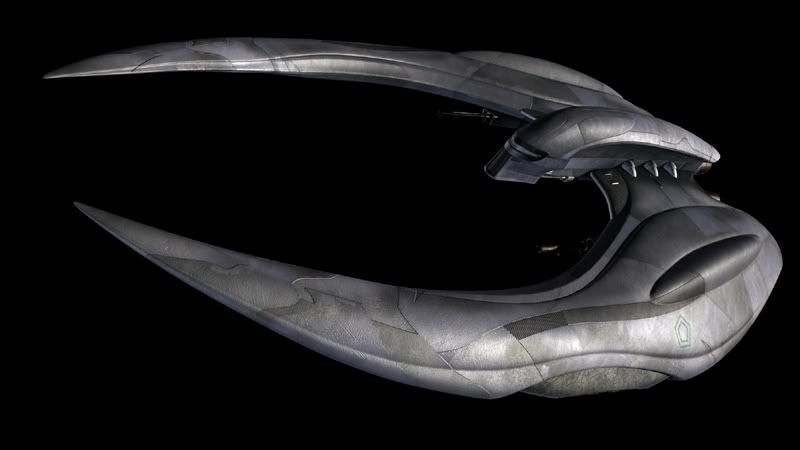 Could these two be related in some way?
(Image credit: rok1966 on Flickr and speed_190 on Photobucket)
Subscribe to:
Posts (Atom)